
Canada’s First-Time Home Buyer Incentives
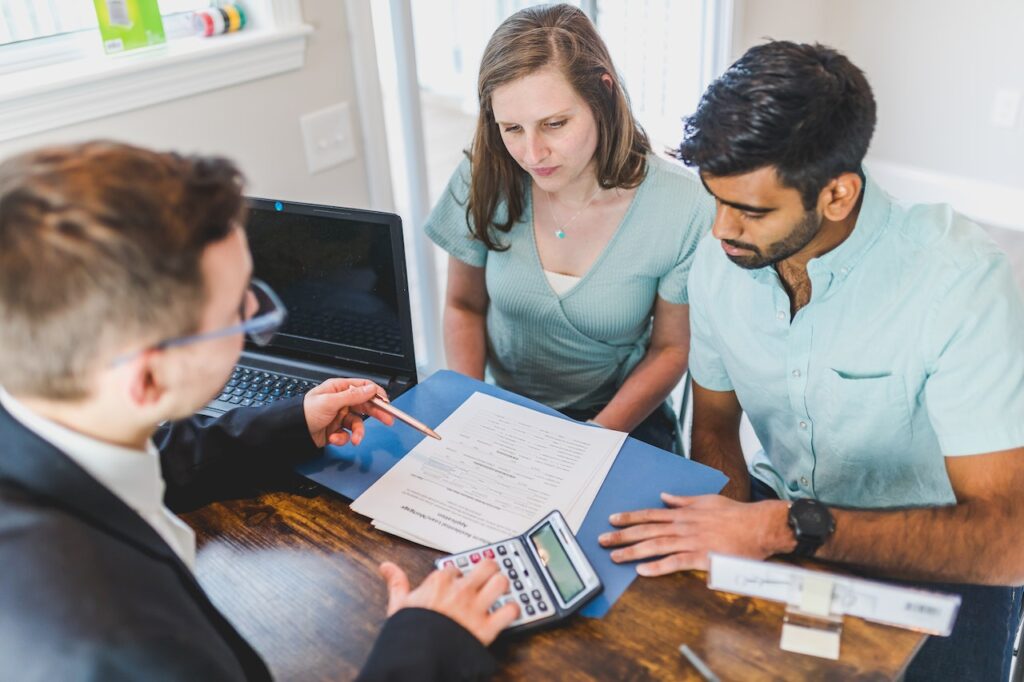
Canada’s First-Time Home Buyer Incentives programs are available for a vast array of people. They can be used in the following way:
1. Rebates for land transfer taxes, which partially or fully reimburse your land transfer tax.
2. Canada’s First-Time Home Buyer Incentives program allows you to contribute a portion of your ownership owning with the government. Some communities even provide additional initiatives to help with down payments (DPAPs).
3. Starting March 19, 2019, you’ve been able to withdraw up to $35,000 tax and penalty-free from your contributions to an RRSP under Canada’s First-Time Home Buyer Incentives.
Programs & Discounts for Canada's First-Time Home Buyer Incentives
In Canada, there are several programs available when it comes to First-Time Home Buyer Incentives.
For many Canadians planning to purchase their first house, they assist in lowering the cost of and increasing access to housing. While several locations may provide their own incentives, the majority of Canadians can enroll in three of the following programs for Canada’s First-Time Home Buyer Incentives:
● Programs for Land Transfer Tax Rebates.
● The First-Time Home Buyer Incentive Program of the Government of Canada.
● The Home Buyers’ Plan for RRSPs
● Savings for a First Home
● The First-Time Home Buyer Incentive Program of the Government of Canada.
● The Home Buyers’ Plan for RRSPs
● Savings for a First Home
Activities such as the Canada All Canadians can apply for the Home Buyers’ Plan and the First-Time Home Buyer Incentives. Others, like tax credits for land transfers, might differ by province and municipality. The expense of purchasing a home is substantial. Consequently, getting a cashback mortgage might be helpful to cover unforeseen costs.
Land Transfer Tax Rebates for Canada’s First-Time Home Buyer Incentives By Provinces
|
|
Ontario
|
Quebec
|
PEI
|
|
|---|---|---|---|---|
|
Max Land Transfer Tax Rebate
|
$8,475
|
$8,000
|
$5,000 to $15,000
|
N/A
|
|
Max Qualifying Home Price
|
N/A
|
$525,000
|
$225,000 to $630,000
|
N/A
|
Ontario
Ontario Land Transfer Tax
Ontario assesses a land transfer tax on the purchase price of your property using a tax-bracket system.
The following is a detailed overview of your province's land transfer tax.
Calculation of land transfer tax (without any rebate) for a property in Ontario worth $500,000.
Tax Bracket
Marginal Tax Rate
Marginal Purchase Price
Marginal Tax
First $55,000
0.5%
× $
55,000
= $
275
$55,000 to $250,000
1.0%
× $
195,000
= $
1,950
$250,000 to $400,000
1.5%
× $
150,000
= $
2,250
$400,000 to $2,000,000
2.0%
× $
100,000
= $
2,000
Over $2,000,000
2.5%
× $
0
= $
0
Total Tax
$
6,475
For First-Time Home Buyer Incentives in Ontario, a land transfer tax rebate of up to $4,000 is
available.

Tax on Toronto Land Transfers
Toronto imposes a separate property transfer tax that is equivalent to the one in Ontario. In addition,
you'll have to pay a $75 administrative charge plus HST.
For First-Time Home Buyer Incentives in Toronto, a land transfer tax credit of up to $4,475 is available. On The City of Toronto website for Municipal Land Transfer Tax Rebate Opportunities, you may find out more information about the rebate.
British Columbia
British Columbia Land Transfer Tax
British Columbia imposes a land transfer tax on the purchase price of your property using a tax-bracket
system. Below is a detailed overview of your province's land transfer tax.
Calculation of land transfer tax (without any rebate) for a property in BC worth $500,000.
Tax Bracket
Marginal Tax Rate
Marginal Purchase Price
Marginal Tax
First $200,000
1.0%
× $
200,000
= $
2,000
$200,000 to $ 2,000,000
2.0%
× $
300,000
= $
6,000
$2,000,000 to $ 3,000,000
3%
× $
0
= $
0
Over $3,000,000
5.0%
× $
0
= $
0
Total Tax
$
8,000
When buying a new house in BC, purchasers are required to pay a Property Transfer Tax (PTT). The tax is
worth:
● The first $200,000 at 1%.
● 2% on the remaining debt up to $2,000,000
● 3% of the remaining amount over $2,000,000
● If the property is residential, an additional 2% on the portion over $3,000,000 is required.
● 2% on the remaining debt up to $2,000,000
● 3% of the remaining amount over $2,000,000
● If the property is residential, an additional 2% on the portion over $3,000,000 is required.
There are a number of requirements that must be met in order for you to be exempt from this tax. In
BC, there is an additional 20% tax that foreign buyers must pay.
British Columbia gives a land transfer tax credit of up to $8,000 to First-Time Home Buyer Incentives
for homes under $525,000 in value. If your asking price is $500,000 or less, the rebate includes the
whole tax amount. Otherwise, there is a partial refund.
See the official regulations for more information.
Québec
Québec Land Transfer Tax
Québec charges a land transfer tax on the purchase price of your property using a tax-bracket system.
Below is a detailed overview of your province's land transfer tax.
Calculation of land transfer tax (without any rebates) for a property in Quebec worth $500,000.
Tax Bracket
Marginal Tax Rate
Marginal Purchase Price
Marginal Tax
First $53,200
0.5%
× $
53,200
= $
266
$53,200 to $ 266,200
1.0%
× $
213,000
= $
2,130
Over $266,200
1.5%
× $
233,800
= $
3,507
Total Tax
$
5,903
A Land Transfer Tax known as the Welcome Tax is levied by Quebec; it is different for Montreal but the
same for the rest of the province. For real estate worth more than $258,600, it rises to a maximum of
1.5%.
Two extra transfer bands apply to homeowners in Montreal: 3.5% for real estate valued at above
$2,059,900, and 4% of any amount over $3,000,000. February 1st, 2022 saw the introduction of the 4%
bracket.
The rates shown above are valid through the 2022 fiscal year. If your property is worth less than $5,000
or if you are giving it to a member of your immediate family, you are free from the land transfer tax.
Purchasing Real Estate Under Construction
Home Buyer Conditions
Values of Eligible Properties
A One-Time Payment
Single purchaser without kids
Under $225,000
$5,000
No-Household Children's (More than one buyer)
Under $280,000
$5,000
Households with at least one minor child
less than $400 000 (increases to $450,000 if the property is in the downtown area)
$10,000 ($15,000 if the property is in the downtown area)
Households with at least one child under 13 and who have purchased the property in the prior five years
Under $400,000 (increases to $450,000 if the property is in the downtown area)
(Rates go up to $15,000 if the property is in the downtown area) $10,000
Buying Pre-Existing Property
Home Buyer Conditions
Values of Eligible Properties
A One-Time Payment
Households with at least one minor child
Under $630,000
$5,000 to $7,000
Households with at least one child under 13 and who have purchased the property in the prior five years
Under $630,000
$5,000 to $7,000
Island of Prince Edward
The PEI transfer tax exemption exempts first-time homebuyers from paying the property transfer tax.
Before acquiring your house, you must have lived there for 183 days straight, or you must have lived in
your newly bought home for at least 183 days straight.
For First-Time Home Buyer Incentives, the maximum purchase price that qualifies for a return is
unlimited. Prior to 2016, a maximum purchase price of $200,000 qualified for a refund.
If the price of the property being transferred is less than $30,000, non-first-time homebuyers are also
exempt from PEI's real property transfer tax.
Taxes on Land Transfers
In the majority of provinces, you can be required to pay a land transfer tax to the provincial government
at the time of closing when you purchase a home or piece of property. The valuation of the property is
typically used to determine the tax rate. A separate land transfer tax is also levied in several areas,
including Toronto.
Your Breakdown of Land Transfer Tax
Your land transfer tax for a $500,000 house in Toronto, Ontario, would be:
Taxes totaled $4,475
+ $6,475 in provincial taxes
+ $6,475 in municipal taxes
-Rebate total: $8,475
Determine the land transfer taxes you owe.
+ $6,475 in municipal taxes
-Rebate total: $8,475
Determine the land transfer taxes you owe.
Most Common Questions About Canada’s First-Time Home Buyer Incentives
Am I purchasing my first home?
Each province defines a first-time home buyer differently for Canada’s First-Time Home Buyer Incentives. Generally speaking:
● You have to be at least 18 years old.
● You must be a permanent resident or a citizen of Canada.
● The property must be used as your primary residence.
● You are not allowed to have ever owned a house or a portion of a house, anywhere in the globe.
● You cannot have owned a home when you were married to or living with your common-law partner.
● You must be a permanent resident or a citizen of Canada.
● The property must be used as your primary residence.
● You are not allowed to have ever owned a house or a portion of a house, anywhere in the globe.
● You cannot have owned a home when you were married to or living with your common-law partner.
How can I submit a refund claim?
At the time of registration, you may ask for an instant refund or a tax exemption.
I didn't request a reimbursement when I registered. Do I still qualify?
Yes. After the registration of your new house, you may request a refund up to 18 months later.
If I'm not a Canadian citizen or permanent resident, am I still eligible for a rebate?
In some circumstances, yes. You have 18 months starting from the date of registration after the
purchase of a property to apply for a reimbursement. You are eligible to receive the entire amount of
the First-Time Home Buyer Incentives rebate if you become a citizen or get permanent residency
within this time.
What is the Speculations Tax on Non-Residents?
The Non-Resident Speculation Tax (NRST), commonly referred to as the land speculation tax, is a 25%
tax in Ontario and a 20% tax in British Columbia on residential real estate. Only those who are not
Canadian citizens or permanent residents are subject to the tax. However, the Canadian Federal Budget
for 2022 established a prohibition on property purchases for anyone who aren't a Canadian citizen or
resident.
Since provincial programs are superseded by the federal announcement, the NRST will be useless while
the prohibition is in place. However, NRST will continue to run up until the federal legislation is
approved and outside investors are once again invited. Visit our Land Transfer Tax Calculator for more
details.
First-Time Home Buyer Incentive Program of the Canadian Government
Canada’s First-Time Home Buyer Incentives Shared Equity Incentive Program, offered by the Canadian
government, allows you to split some of the ownership and purchase costs with the government. For
the same amount of equity in your property, the government will contribute 5% or 10% of the purchase
price toward your down payment under the program. Due to the bigger down payment, this can
drastically lower your interest payments and CMHC mortgage insurance charges.
You must pay back the government's portion of your house within 25 years or when you sell it,
whichever occurs first. The government will receive a share of any increases or decreases in the market
value of your house. Since this is not your conventional loan, there won't be any interest fees. Many
towns also provide extra shared equity mortgages in the form of programs for down payments (DPAPs).
Statistics from the CMHC's First-Time Home Buyer Incentive
The CMHC First-Time Home Buyer Incentives (FTHBI) has helped 10,952 homebuyers since it was
established. 100,000 Canadians were expected to receive $1.25 billion from the initiative over a three-
year period. However, the initiative has only provided $216.5 million in shared equity mortgage funding
to this point.
In Quebec and Alberta, where there have been over 3,800 and 2,800 participants, respectively, as of
March 2021, the initiative has had the most success. With just 5, 9, and 39 successful applications, the
program is least popular in the housing markets of Victoria, Vancouver, and Toronto.
City
Successful Applications
Percentage of All Successful Applications
Edmonton
1,288
13.14%
Calgary
636
6.49%
Winnipeg
556
5.67%
Québec City
419
4.27%
Montréal
274
2.79%
Halifax
259
2.64%
Saskatoon
200
2.04%
Laval
190
1.94%
Gatineau
167
1.70%
Lévis
151
1.54%
Longueuil
144
1.47%
Rocky View County
128
1.31%
Regina
125
1.27%
Sherbrooke
118
1.20%
Terrebonne
110
1.12%
Ottawa
103
1.05%
Saguenay
102
1.04%
Source: Response to Order Paper question no. 724, September 1, 2019, to March 31, 2021

First-Time Home Buyer Incentives to share equity: Questions and Answers
Am I eligible for this program?
Homes located in the Vancouver, Victoria, or Toronto CMA are subject to higher limitations. The
maximum loan amount is raised to 4.5 times yearly household income, with the upper ceiling on income
being set at $150,000. This also implies that you may borrow up to $675,000 in total.
The program is only accessible for mortgages with CMHC insurance. As a result, you are immediately
disqualified if
● Your down payment is at least 20% of your buying price or your purchase price is $600,000 or more.
● To be eligible for a government First-Time Home Buyer Incentives, you must be a Canadian citizen or
permanent resident, you or your partner must be a first-time home buyer (see 'Am I a first-time home
buyer?' below), and your annual household income cannot exceed $120,000 ($150,000 if you live in the
Toronto, Vancouver, or Victoria CMAs).
● Even if you meet these requirements, the amount you may borrow is capped based on your yearly
family income. In unique circumstances, other standards could apply.
Am I a first-time home buyer?
If you meet at least one of the following requirements, you are considered a Canada’s First-Time Home Buyer Incentives: you have never bought a home; you have experienced the dissolution of a marriage or common-law
partnership; and, in the previous four years, you have not lived in a home that you or your partner
owned.
To qualify, just one spouse or common-law partner needed to complete the prerequisites.
How much time does the show last?
The program began on September 2, 2019, and it will end on September 2, 2022, or three years later,
whichever comes first, when a total of $1.25 billion in incentives have been given out. Less than 20% of
the program's $1.25 billion objective had been financed as of January 2022. Therefore, it will probably
finish on September 2, 2022.
How much am I entitled to?
● You can qualify for a 5% shared-equity incentive for pre-existing, resale, or mobile/manufactured
houses.
● You can apply for either a 5% or a 10% shared-equity incentive for newly built homes.
● Both of these situations might involve borrowing restrictions.
● You can apply for either a 5% or a 10% shared-equity incentive for newly built homes.
● Both of these situations might involve borrowing restrictions.
What exactly is the borrowing limit and how does it operate?
Your credit limit is four times your household's annual income (4.5x for Toronto, Vancouver, and Victoria
CMAs). You are not permitted to borrow more than this amount in total (mortgage principal plus
shared-equity incentive). The limit does not include the CMHC mortgage insurance payment.
There are no partial rewards offered. Only the 5% and 10% shared equity options are available.
What must I repay, and how much?
Your debt's size is determined by the property's fair-market value when it's time to make payments.
Depending on the incentive program you apply for (ex: First-Time Home Buyer Incentives), you will
have to pay either 5% or 10% of the value of your property. In either scenario, there is no interest fee
and the government receives a proportionate part of earnings and losses.
What is required of me to repay the incentive?
You have 25 years to repay the incentive or as soon as the property is sold, whichever comes first. The
whole must be paid in one complete lump sum.
Early payment is not subject to any fees or penalties for prepayment. If you anticipate that the value of
your property will increase in the future, paying in full now could give you the advantage of owning a
larger percentage of the increase in value.
I'm purchasing a manufactured or mobile house. Do I qualify?
Yes. Even if the house is new, you can only apply for the 5% shared-equity incentive option.
Examples
For $400,000, John and his wife wish to purchase a brand-new house. Under the shared equity incentive scheme, they would be eligible for $40,000, or 10% of the purchase price.
This would reduce their monthly payment from $1,870 to $1,673 at a 3% interest rate, saving them close to $200 a month or $60,000 over the course of the mortgage.
Assuming a 5-year fixed term with a 25-year amortization and a 5% down payment, John and his wife would need to earn between $95,000 and $120,000 in total in order to be eligible.
This would reduce their monthly payment from $1,870 to $1,673 at a 3% interest rate, saving them close to $200 a month or $60,000 over the course of the mortgage.
Assuming a 5-year fixed term with a 25-year amortization and a 5% down payment, John and his wife would need to earn between $95,000 and $120,000 in total in order to be eligible.
Marissa has $60,000 set aside for a down payment on her $ 80,000-a-year salary. She may buy a
property for up to $380,000 and still be eligible for the shared equity incentive.
She spends $360,000 on a resale apartment. Marissa may obtain a mortgage for under $282,000 plus insurance thanks to an $18,000 first-time home buyer incentive from the Canadian government.
*Presuming a 5% down payment, a 5-year fixed term, and a 25-year amortization period.
She spends $360,000 on a resale apartment. Marissa may obtain a mortgage for under $282,000 plus insurance thanks to an $18,000 first-time home buyer incentive from the Canadian government.
*Presuming a 5% down payment, a 5-year fixed term, and a 25-year amortization period.
Plan for RRSP Home Buyers
In order to enable Canada’s First-Time Home Buyer Incentives purchasers to withdraw up to $35,000 tax-free from their registered retirement savings plan (RRSP) in order to purchase or construct a house, the federal government established the Home Buyers’ Plan in 2019. The money must be paid back over a 15-year period. There was a previous cap of $25,000, but this is the most recent increase.
Frequently Asked Questions for the RRSP Home Buyers' Plan
To be eligible for the First-Time Home Buyer Incentives, you must fulfill the following requirements:
● At the time of withdrawal, you must live in Canada.
● The RRSP(s) from which the withdrawals are made must belong to you.
● Before withdrawal, your RRSP contributions had to have been there for at least 90 days.
● The relevant residence must have been owned by either you or your spouse/common-law partner
for longer than 30 days.
● In the previous four years, neither you nor your spouse/common-law partner may have owned
another house.
The last condition is waived if you are disabled. In certain circumstances, more criteria can be necessary.
What advantages does the home buyer's plan offer?
You can use your RRSP contributions made before taxes for your down payment according to the Home
Buyer's Plan. As opposed to using your after-tax income, this can help you save a lot more for the down
payment for your First-Time Home Buyer Incentives.
For instance, $10,000 represents around $16,667 in pre-tax income if you are in the 40% tax band and
intend to save aside $10,000 a year for a future down payment.
Is the withdrawal cap per family or per person?
The maximum withdrawal is per person. Each spouse or common-law partner is subject to a unique
withdrawal cap. You are permitted to withdraw up to $70,000 if you are married or living together as
common-law partners.
It should be noted that the scheme only permits withdrawals from RRSPs made by the person listed as
the account's owner. To benefit from the higher maximum, each couple must have their own RRSP
account. Additionally, payments to spousal and individual RRSPs must be made at least 90 days before
the first withdrawal due to additional restrictions.
How do I withdraw money?
To make a withdrawal, you must submit Form T1036 to your banking institution.
Can I withdraw money several times?
One calendar year allows for an unlimited number of withdrawals up to a maximum of $35,000 per
person. Withdrawals made in January of the year after are likewise free from taxes. As a result, we
advise either making a single withdrawal or beginning withdrawals early in the year.
When must I pay back my withdrawal?
The amount you withdrew from your RRSP must be repaid within 15 years. The calendar year after the
withdrawal is when repayments begin. You will receive a Home Buyers' Plan statement of account from
the Canada Revenue Agency (CRA) every year that includes information about your minimum payment
and remaining balance.
Your subsequent minimum payments will be lower if you pay more than the required minimum. You are
not penalized if you repay the entire loan amount at any time.
How do I pay back the loan?
You must contribute to your RRSP and designate a portion of the contribution as an HBP payback in
order to make repayment under the Home Buyers' Plan (HBP). This designation can be made on
Schedule 7 line 246 when submitting your subsequent tax return.
Examples
Examples
Despite only having $80,000 set aside for a down payment, Jessica and her husband wish to purchase a $900,000 property in Toronto. Their regular monthly payment would be $4,036 assuming a 3% interest rate. *
Jessica and her husband take $35,000 apiece out of their own RRSP accounts. They contribute a total of $150,000 as a down payment, bringing their monthly mortgage payment down to $3,649 instead. In all, they will save $387 a month or $116,000 over the course of their mortgage.
They will have to make $4,667 in payments per year for 15 years to pay off the debt. The RRSP withdrawal is not subject to tax or interest.
Considering a fixed period of five years with a 25-year amortization.
Despite only having $80,000 set aside for a down payment, Jessica and her husband wish to purchase a $900,000 property in Toronto. Their regular monthly payment would be $4,036 assuming a 3% interest rate. *
Jessica and her husband take $35,000 apiece out of their own RRSP accounts. They contribute a total of $150,000 as a down payment, bringing their monthly mortgage payment down to $3,649 instead. In all, they will save $387 a month or $116,000 over the course of their mortgage.
They will have to make $4,667 in payments per year for 15 years to pay off the debt. The RRSP withdrawal is not subject to tax or interest.
Considering a fixed period of five years with a 25-year amortization.
With the aid of the RRSP Home Buyers' Plan, Nathan bought a house five years ago. He took out the
maximum of $35,000 and has consistently paid the yearly minimum of $2,333.
Nathan, though, can only manage to make a $1,000 payment this year. On his subsequent tax return, the missing $1,333 is shown as taxable income. His minimum payment will increase to $2,481 starting the next year since his remaining amount is now higher than anticipated. There are no additional charges or penalties.
Nathan, though, can only manage to make a $1,000 payment this year. On his subsequent tax return, the missing $1,333 is shown as taxable income. His minimum payment will increase to $2,481 starting the next year since his remaining amount is now higher than anticipated. There are no additional charges or penalties.

GST/HST Rebate for New Homes
You could be qualified to recoup the GST or federal portion of the HST paid on the acquisition of a house
that was recently built or significantly remodeled.
The following activities are eligible for the incentive:
This incentive is available for the following: buying a home from a builder or building one yourself
renovations in which at least 90% of the interior of the previous home has been removed or rebuilt
mobile and floating homes conversion of the non-residential property into a home buying shares in a
cooperative housing project
Additional requirements apply. Additional qualifying requirements for the rebate or First-Time Home
Buyer Incentives details may be found on the website of the Canadian government.
Credit for Home Buyers' Amounts
The Home Buyers' Amount tax credit was suggested to be extended in the 2022 budget release. This
would boost the benefit for first-time homebuyers to $10,000 starting with the 2022 tax year. Line
31270 of your tax return contains a non-refundable income tax credit for this credit.
You and your spouse can both receive a portion of this tax credit, but the total cannot exceed $10,000.
Similarly, only a total of $10,000 can be claimed by all claimants if more than one individual qualifies for
the tax credit for a qualified dwelling. The quantity of the tax deduction that is actually taken is $1,500
since non-refundable tax incentives are claimed at a rate of 15%.
First-Time Home Buyer Incentives are only eligible for the tax benefit. One who has not resided in a
house owned directly by them or by their spouse/partner in the past four years is considered a first-time
home buyer.
Current and newly built residences in Canada, such as single-family, semi-detached, townhomes, mobile
homes, condominiums, and apartments, are all eligible. Within the next year, the house must be used as
your primary residence.
You can still be eligible for the Property Buyers' Amount even if you have purchased a home before. If
you have a handicap, are qualified for the disability tax credit, and have completed form T2201, you may
be eligible. If you bought the house for a family member who has a handicap, you may also be eligible
for the tax credit. The new house must be built with the goal of being more accessible for the disabled
person than the former residence.
